Start with a role, not the entire internet
To get a job in 2026, build a repeatable process: choose a clear role, match your experience to its requirements, show relevant work, apply thoughtfully and practise explaining your decisions. A résumé website can support that process. It cannot manufacture experience or promise an offer.
Pick one or two related role types and collect five job descriptions you would realistically accept. Note the repeated responsibilities, tools, location requirements and experience expectations. Separate the essentials from the wish list. You are choosing where to spend your effort, not auditioning to become every department.
For example, ‘marketing’ is a very large room. ‘Junior content marketer for a consumer brand’ gives you something concrete to prepare for. If you are changing careers, identify the responsibilities you have already handled in another setting and the gaps you still need to close.
Build a CV that makes the match obvious
Keep a master record of your experience, then tailor a version for each role. Put the most relevant work near the top. Use the employer’s terminology where it accurately describes your skills. Follow the application’s file-format instructions and keep a version with clear headings and selectable text.
Replace vague claims with evidence. ‘Helped with social media’ could become ‘Planned a four-week content calendar, wrote 12 posts and coordinated approvals.’ Add results only when you can verify them. If you cannot measure revenue impact, explain the scope, the process or what improved. Invented percentages do not become less invented in a tasteful font.
Harvard’s career guidance on AI and résumés recommends tailoring your résumé to the role. AI can help you compare a draft with a job description or tighten a sentence. Check every output yourself, remove confidential information before using a tool, and never let it invent qualifications.
Give your claims somewhere to live: a résumé website
A résumé website is useful when your work benefits from examples: writing, design, software, marketing, research or projects you can explain publicly. It gives a hiring manager a direct route from ‘I did this’ to ‘here is what I actually made.’ CareerOneStop’s portfolio guidance also describes portfolios as a way to share work samples during a job search.
Start with one page: your target role, a short introduction, two or three relevant projects, a downloadable CV and a contact email. For each project, explain the problem, your contribution, the constraints and the outcome. Make clear what teammates did. A screenshot alone is a picture; the explanation is the evidence.
New to the field? Use a college project, volunteer assignment or clearly labelled self-initiated concept. A speculative redesign is perfectly respectable. Pretending the company commissioned it is less charming.
Keep the website optional for the reader. Submit the CV and application fields the employer requests; add your website as a supporting link. Do not assume an applicant-tracking system will visit it. Check mobile readability, broken links and whether a recruiter can find your work without logging in. Password mazes belong in escape rooms.
For an example of structure, explore Merrill’s digital résumé. It is a design reference, not evidence that a website produces job offers. Our résumé website versus CV guide explains when each format earns its place.
Apply with context, and talk to actual humans
Create a short target-company list. Check vacancies on the company’s own careers page where possible, read the responsibilities, and save the role details before you apply. Keep a tracker with the company, role, date, contact, application link and next action.
Reach out to people you already know, alumni or relevant professional communities with a specific question. Ask about the work or team rather than opening with a demand for a referral. If someone offers to refer you, send the exact role and a concise explanation of your fit. Their kindness should not require an archaeological dig through your attachments.
A useful message might say: ‘I’m moving into junior content roles and noticed your team’s product guides. I’ve made two writing samples in that format. If you have time, I’d value one suggestion on what your team looks for.’ Keep it personal, respect a no, and avoid repeated follow-ups.
Practise the interview before the interview
Choose four examples you can explain aloud: a successful project, a difficult decision, a mistake and a collaboration. Cover the situation, what you were responsible for, the action you took and the result. Be ready to discuss what you would change.
Open your portfolio while practising. Can you explain why a project matters in two minutes without reading it word for word? Can you distinguish your contribution from the team’s? Prepare questions about expectations, feedback and the problems the role should solve. An interview is also your chance to learn whether you want this particular job.
A two-week reset you can actually follow
- Days 1–2: choose your target roles and compare five relevant vacancies.
- Days 3–4: update your master CV and write two evidence-led project summaries.
- Days 5–6: publish or tidy your portfolio if the role benefits from one; test every link.
- Days 7–10: submit a manageable batch of tailored applications and start a few relevant conversations.
- Days 11–14: rehearse interviews, follow up where appropriate and review the response pattern.
This is a suggested routine, not a hiring timetable. If relevant applications rarely lead to conversations, review your targeting and CV. If interviews stall, practise your examples and ask for feedback where possible. Hiring also depends on budgets, competition and circumstances outside your control. Silence is information about the process, not a measurement of your worth.
Do you need to buy a website to get hired?
No. A clear CV and suitable work samples can be enough. A free portfolio tool or existing professional profile may cover your needs. Consider a personal website when you want a consistent home for your work and can keep it current.
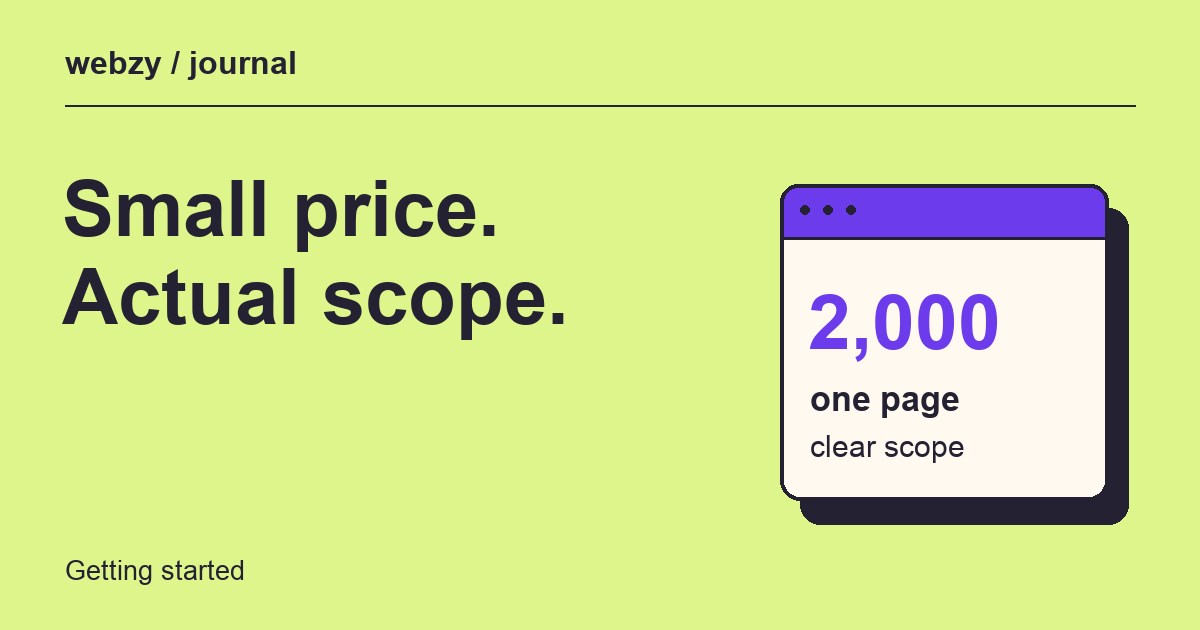
If you want help building one, Webzy Mini starts at ₹2,000 for one template-based page using your supplied content, with one revision round. Domain and hosting cost extra and are agreed before starting. Spend on the presentation when the substance is ready. Your strongest asset is still the work.
Practical guides from Webzy, the website studio founded by Merrill Dsilva. We sell website services; our own offers are identified in the text. Examples are illustrative unless linked to real work.
Spot something that needs updating? Tell Merrill.