Start with the questions customers ask
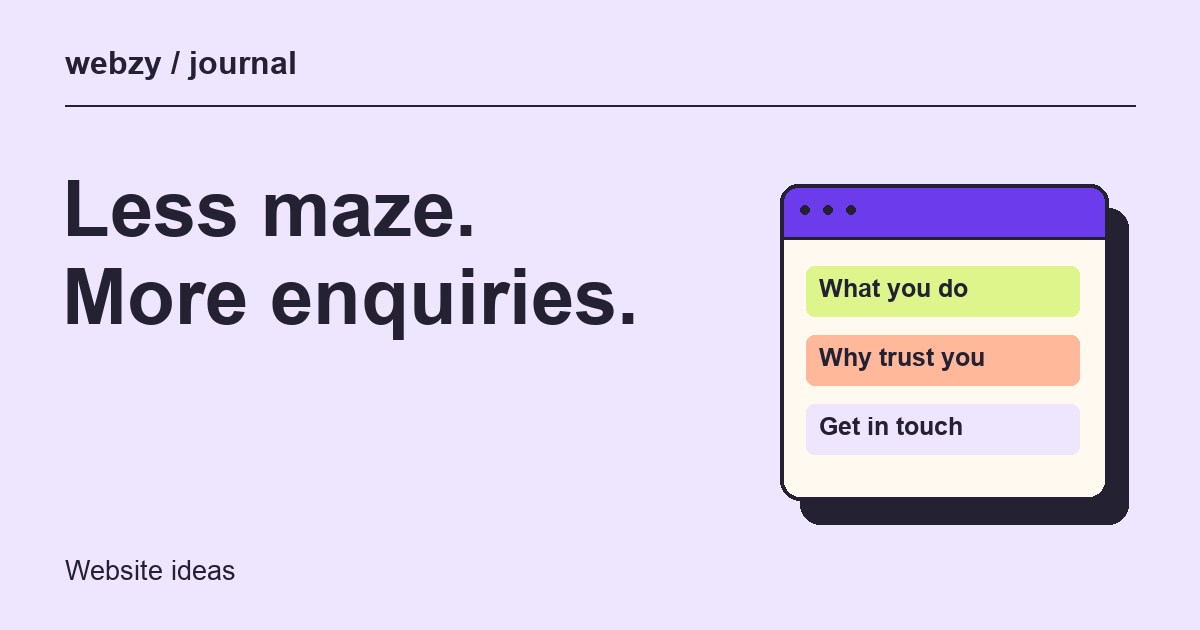
A small business website usually needs to explain what you offer, who it is for, why someone should trust you and how to take the next step. Those jobs often map to Home, Services, About, Work or Testimonials, and Contact. They do not always need five separate pages.
A business with one simple service can combine them into sections on a single page. A business with several distinct services may benefit from separate pages that answer different questions. Choose the structure around your customer’s decision, not around how many menu items look impressive.
Home: say what you do before getting poetic
Give visitors a specific introduction: ‘Home-style lunch subscriptions in Ahmedabad’ communicates more than ‘Redefining excellence through passion.’ Add the area you serve, the core benefit and a clear next action. A visitor should not need to inspect your Instagram bio to understand your homepage.
Show a small selection of services or work, then direct people to details. Pick a primary action such as ‘Ask about availability’ or ‘View packages’. Six equally loud buttons create a committee meeting where a decision should be.
Services: help someone decide whether you fit
Explain what each service includes, who it suits, what the process involves and how pricing works. If every project needs a quote, name the factors that change it. Add real answers to common questions: turnaround, service area, required inputs or whether an initial consultation is included.
For example, a tutor might explain subjects, class format, age groups and timings. A furniture business might explain materials, customisation and delivery areas. Describe the actual offer; generic copy cannot answer a specific customer.
About and proof: show the people and the work
An About section should explain who is responsible and what relevant experience they bring. It does not need to begin with the invention of commerce. Use a real photo if appropriate, a short introduction and facts you can stand behind.
For proof, show representative work, detailed examples or customer feedback you have permission to publish. Label personal concepts and demo work clearly. Do not borrow testimonials, imply a client relationship that did not exist or turn an estimate into a reported result. One honest example is more useful than a wall of suspiciously delighted strangers.
Contact: make the next step obvious
List working contact details, a service area and useful response expectations. If you use a form, ask only for what is needed to begin the conversation. Test where submissions arrive. A beautiful form connected to absolutely nowhere is a surprisingly effective way to avoid customers.
If you accept walk-ins, include accurate hours and directions. If you work remotely or by appointment, say so. Add relevant privacy information where you collect personal data; stores and other specialised businesses may need additional policies based on their activities.
One page or several? Use this quick test
If you can explain the offer, show enough proof and provide contact details without burying essential information, a single page may work. If visitors need substantial information about distinct services, give those services room. Separate pages should be useful on their own, not copies with a different neighbourhood name pasted in.
Prepare your content before deciding the final page count. Webzy Mini covers one page with up to five sections; Business covers up to four pages. Compare the website plans against what your customers need to know, then leave the 37-page empire for another day.
Practical guides from Webzy, the website studio founded by Merrill Dsilva. We sell website services; our own offers are identified in the text. Examples are illustrative unless linked to real work.
Spot something that needs updating? Tell Merrill.